The AdRoll Web Platform
A decade owning a headless build
AdRoll (NextRoll) · Web Architect / Lead Developer · 2016–2026 · Headless CMS / Content architecture / Localization
Why Drupal had to go
adroll.com ran on Drupal and Pantheon, and the stack was the smaller problem: an outside agency had built the templates and codebase, so even routine updates either moved at their pace or took real hands-on work to route around them. Marketing was boxed into a limited set of Drupal templates, on-site testing was slow to stand up, and every change had to carry ten locales forward without breaking them. I wrote the transition plan and made the case: bring the codebase in-house, cut the tool sprawl, and land on a platform developers like me could move fast on and non-engineers could edit without filing tickets.
Why Statamic
I chose Statamic out of familiarity and conviction. At my previous company I had run a similar migration onto Statamic and knew it could carry enterprise scale. WordPress and Drupal were already showing their age in 2015, and flat-file felt like where things were headed: lightweight, developer-friendly, templates in raw HTML and SASS, content living in markdown instead of a heavy database. The whole site was a repo one person could hold in their head. Up until 2017, the web team was just me.
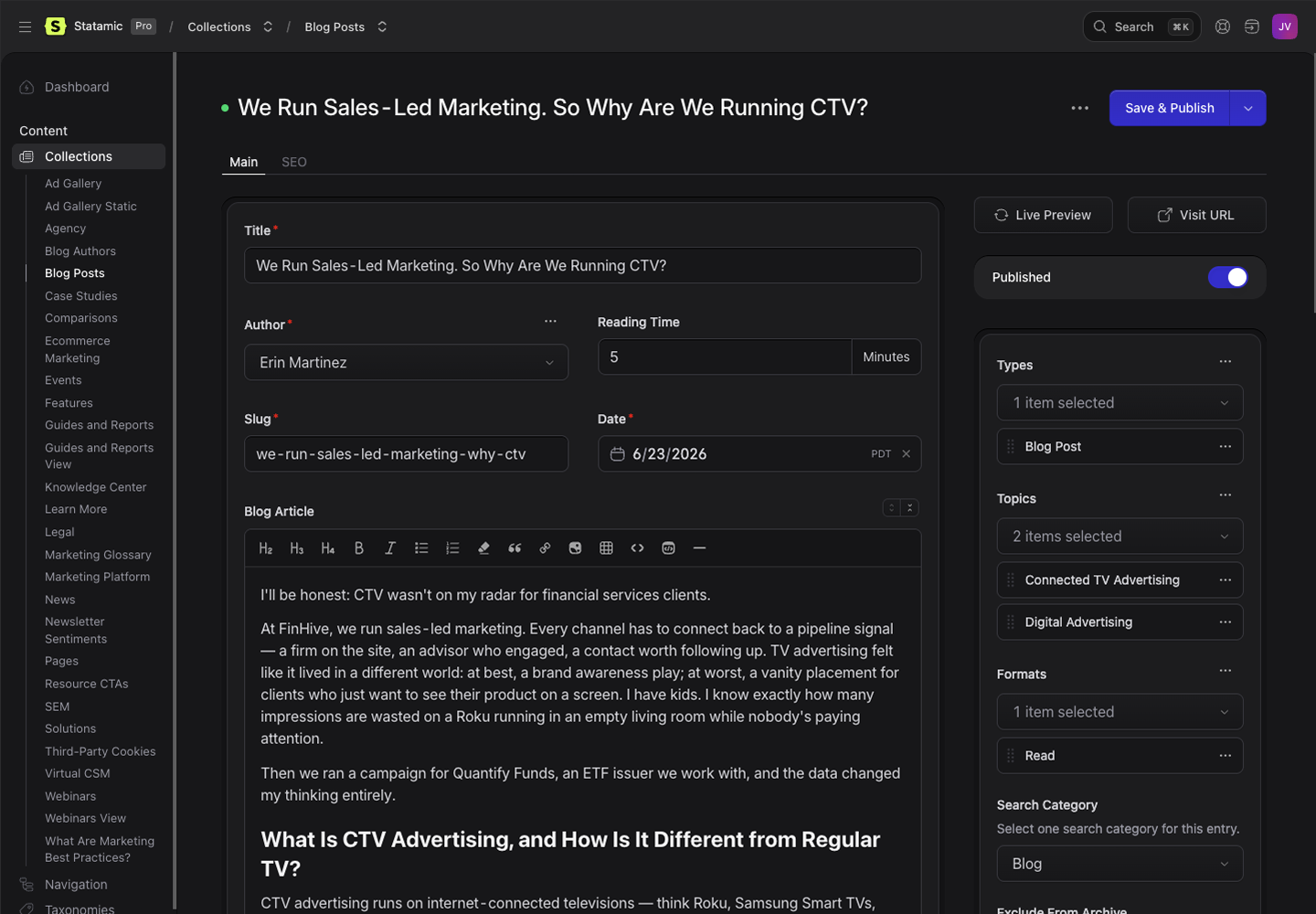
The content model matched the design structure of each section: every editable field mapped to a real component instead of a generic rich-text blob. I started with the blog on purpose: the team came from WordPress and Drupal workflows, so bringing it to full parity, adding, editing, and uploading without touching code, meant their muscle memory carried straight over. Once that pattern proved out, I extended it to the resource library, events, and news, and tickets to the web team for routine content edits steadily dropped.
Localization across ten locales
The Statamic/Smartling integration covered ten locales at launch: US, UK, Irish, Australian, and New Zealand English, plus Japanese, German, Spanish, Dutch, and French. Everything routed through Smartling, even the English variants. The deltas between them were small, but we were selling differently in each market and wanted the site hyper-regionalized to match: enough overhead that we had a localization manager early on. We inherited a Drupal/Smartling setup, and after troubleshooting it I rebuilt the integration on Statamic. Smartling handled the translation flow while I owned the architecture for how content moved through it. When the business later narrowed, I sunset localization cleanly rather than letting it rot.
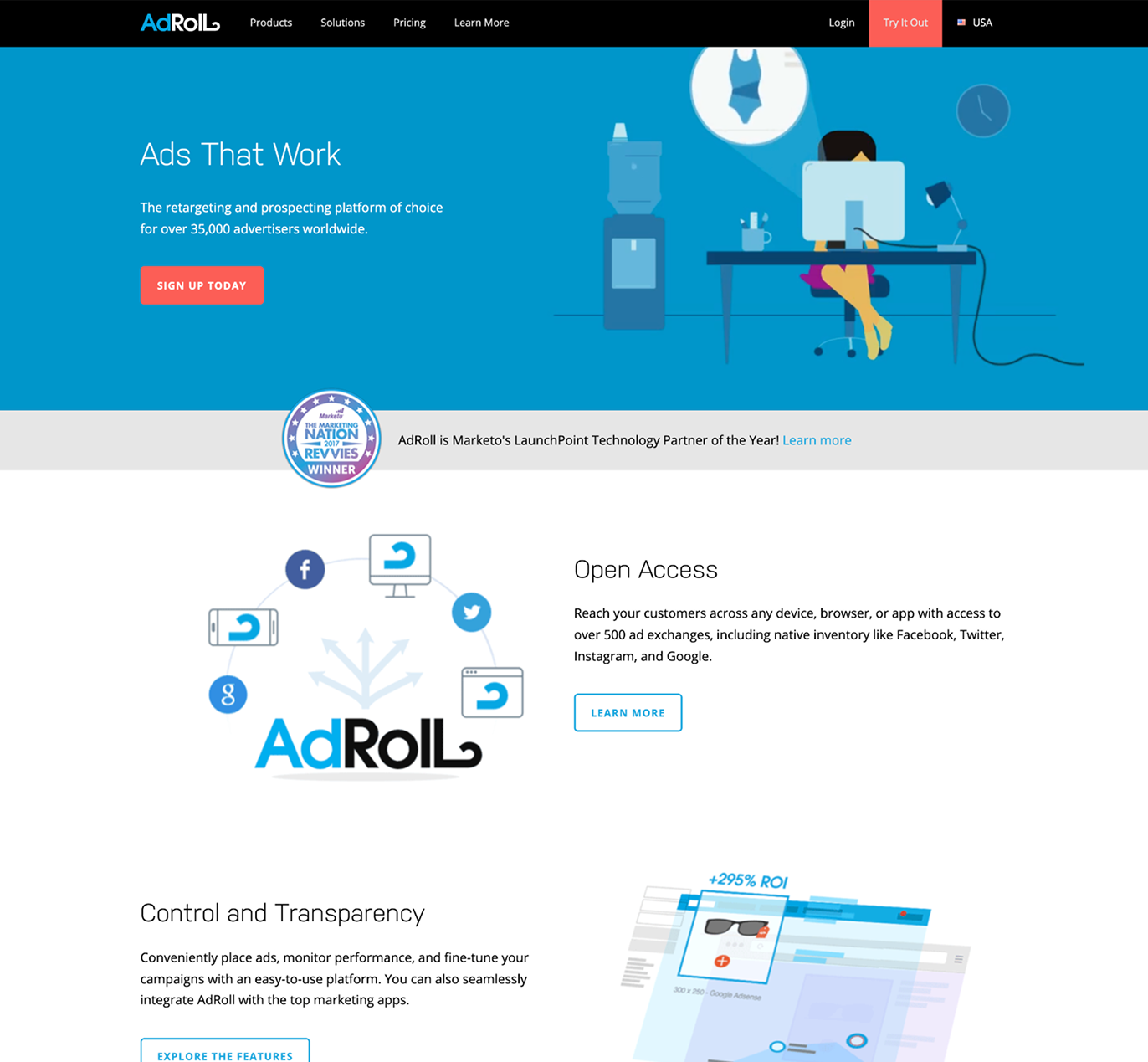
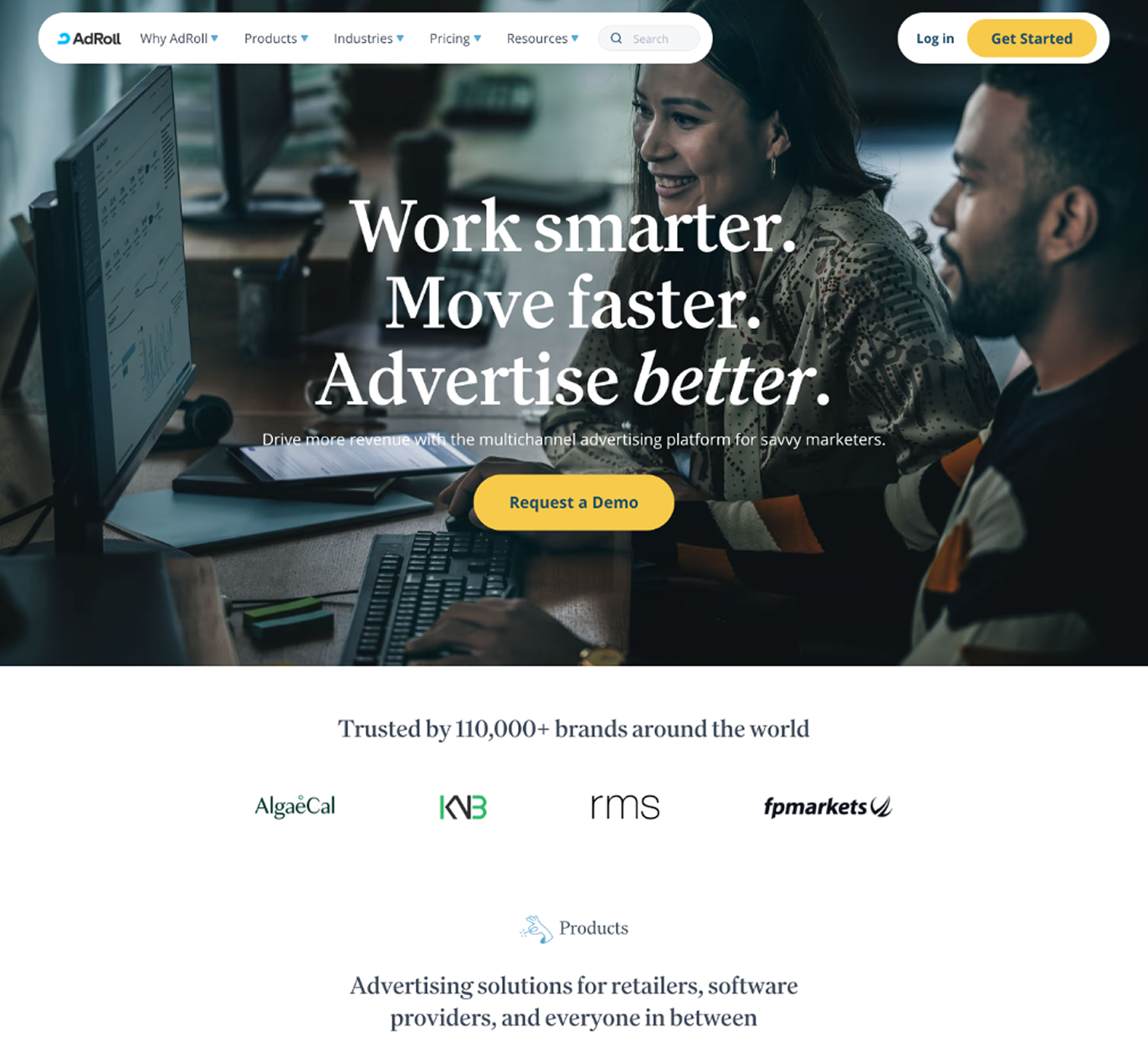
The platform stayed current the whole way. It launched in 2016 on Heroku behind Fastly, with PR preview builds wired up from the start. In 2021 we moved to DigitalOcean and Forge, a migration my web designer/developer led while I oversaw the crossover. In 2026 I brought the stack up to date again: Statamic 6, the latest Ubuntu, PR review links rebuilt on Cloudflare, and a Fastly config pass that improved site caching. The architecture still stands on the scaffolding of the original build. Launched in 2016, never legacy.
2016 · Launch
Heroku + Fastly
PR preview builds
2021 · Migration
DigitalOcean + Forge
led by web designer/developer
2026 · Current
Statamic 6, Ubuntu LTS
Cloudflare PR links, Fastly config
What it held up
A fast, maintainable platform a small team shipped against for a decade, with a content model that kept marketing in control of the site and the web team out of routine edits. The codebase moved fully in-house, no agency in the loop again. The build outlasted every rebrand it carried.
